The ECGI blog is kindly supported by
The Red Card Football Can Show Infantino
There is a certain poetry in the fact that the man who has spent a decade concentrating power at FIFA holds, on paper, almost none of it. In the latest scandal, FIFA suspended Folarin Balogun’s automatic red card ban under Article 27 of its Disciplinary Code, days after United States President Donald Trump called FIFA President Gianni Infantino to ask for a review. Since then, Europe’s associations have been muttering about “options”. UEFA has expressed its “disbelief”, and the Belgian federation has been busy discovering that it has no standing to challenge a decision about its own opponent. The ruling has opened a Pandora’s box. Egypt, eliminated by Argentina after a goal was disallowed on review, now demands the “equal application of the laws of the game”. When rules visibly bend for one member, every member learns to ask why they do not bend for them. Muttering is not a governance strategy. So, as a purely academic exercise, here is how the member associations could actually remove the FIFA President, using nothing but FIFA’s own statutes and the Swiss law that gives it legal existence.
Start with the corporate structure, because it is more familiar than football’s courtiers like to pretend. FIFA is not a monarchy; it is a Swiss Verein, an association, domiciled in Zurich. Its own Statutes say that the Congress is the supreme and legislative body, the Council is merely the strategic and oversight body, and the general secretariat is the executive. In corporate governance terms: Congress is the shareholders’ meeting and the Council is the board. The Statutes cast the President as a non-executive chairman, outside the executive. In practice, he exerts absolute control without ownership through agenda setting power.
Adam Smith observed that the proprietors of joint stock companies remain docile only so long as the “spirit of faction” does not prevail among them. Here is the detail that should worry the chairman if that spirit ever reached the members. Article 35(4) of the Statutes, in full:
“The President chairs the Congress and meetings of the Council. The President shall have no right to vote at the Congress and shall have one ordinary vote on the Council.”
No vote at the Congress. Not even a casting vote at the Council. The President is elected by the Congress, and the same Congress lists his dismissal among its reserved powers (article 28(2)(q)). Were that motion ever tabled, the Statutes would put him in the chair, gavelling along his own defenestration. One member, one vote; each of FIFA’s 211 member associations has exactly one.
Now the mechanism. An incumbent controls the agenda, so the first step is to convene a meeting he cannot stop. FIFA’s own statutes contain the required provision: under article 25(4), the Council shall convene an Extraordinary Congress if one fifth of the member associations request one in writing, the requisitionists specify the agenda, and the meeting must be held within three months. This is no accident of generous drafting: it mirrors Article 64(3) of the Civil Code, which requires a general meeting, by force of law, whenever one fifth of the members demand it. One fifth of 211 is 43. UEFA has 55 member associations. Europe can force the meeting entirely on its own, without asking CONMEBOL, CAF or anyone else for permission. In the language of corporate governance, UEFA is a blockholder: a 26 per cent stake, large enough to call the extraordinary general meeting unaided and concentrated enough to supply the discipline that dispersed ownership cannot.
Two further details make the device unusually difficult to tamper with. First, article 25(5): the agenda of an Extraordinary Congress may not be altered. Item one stays item one; the incumbent cannot bury the motion under forty minutes of development fund announcements. Second, should a Council chaired by the incumbent simply sit on the requisition beyond the three months allowed, the remedy runs through the Swiss courts: Article 64(3) is mandatory law, and a Zurich judge can order the meeting that FIFA declines to call.
The Council does keep one card: the Statutes let it fix the place and date of the meeting, and this tournament has already shown what a host government can do with a visa list. It is a weak card. The meeting must still be held within three months, on two months of notice; a venue chosen to keep fifty five European delegations away would be transparently abusive; the Statutes themselves allow a Congress to be held by videoconference; and under Article 75 of the Civil Code any member may challenge in court, within one month, a resolution obtained by infringing the law or the Statutes. Obstruction of this kind would not save the incumbent. It would merely add paragraphs to the good cause memorandum against him.
Then comes the part that FIFA cannot draft around. Much of Swiss association law merely fills gaps in an association’s own articles; the provisions that matter here are mandatory. Article 65 of the Civil Code provides that the general meeting supervises the governing bodies and may dismiss them at any time; Article 65(3) adds that the right of dismissal exists by operation of law whenever there is good cause. And Article 63(2) provides that mandatory provisions of the Code cannot be altered by an association’s own articles. Whatever entrenchment has been drafted into the Statutes, the underlying Swiss floor wins. One qualification: Article 65(2) preserves “the contractual rights of those dismissed”, so a carefully drafted golden parachute may pay the President handsomely on his way out. What it cannot do is lock the door. FIFA is, in effect, a company whose founding charter cannot contract away the shareholders’ right to fire the board. And “a head of state telephoned the President and a disciplinary sanction evaporated in the middle of a tournament” is not a hard case on the question of good cause.
Notice what this does to the President’s options. The Statutes cannot help him, and the Congress is the very body he would need to overrule. The only way around the power of his own members runs through Bern: persuade the Swiss legislator to amend the law of associations itself, presumably with a helpful call from Washington, which has played the trade card against Switzerland before. This time, of course, it would be the FIFA President placing the call to the US President. But Swiss law is made deliberately slowly. An amendment to the Civil Code passes through consultation, two chambers of parliament and a referendum window of one hundred days in which fifty thousand signatures put the question to a popular vote; and the articles in question govern every sports club, trade union and choral society in the country. Even a government that wished to enact a Lex FIFA, and it is not obvious why it would, could hardly do so inside the three months the requisition clock allows. The deliberate pace of Swiss lawmaking is, for once, football’s best protection.
Here the Statutes offer a delicious silence. FIFA’s drafters wrote elaborate supermajorities for electing a President, two thirds of the members present on a first ballot with three or more candidates, and no bespoke rule for firing one. Dismissal appears as an agenda item to be handled “in accordance with these Statutes”, and the Statutes’ own default then does the work: unless otherwise stipulated, votes and other decisions require a simple majority of the valid votes cast, with abstentions disregarded under the Standing Orders. Article 67(2) of the Civil Code, the default that would otherwise apply, points the same way. Read that drafting asymmetry as a revealed preference. The drafters spent their care on the door into office and left the trapdoor out of it swinging on the statutory hinge.
One last procedural jewel, from FIFA’s own Standing Orders of the Congress: elections are by secret ballot, but ordinary votes are not; for votes, the secret ballot is expressly prohibited. A dismissal motion is a vote, not an election. Unless the incumbent’s lawyers could recharacterise dismissal as a species of election and claw back the secret ballot, a question of the kind that makes Zurich arbitration practices rich, every football association in the world would have to vote on the President’s removal by open show of hands, in the room, on camera. And a roll call, which any 15 member associations may request, would put every position on the record by name.
The whole procedure, then, fits in a paragraph. A written requisition bearing 43 signatures, and UEFA has 55 to hand; agenda item one, which nobody may alter: the dismissal of the President. A meeting within three months. The President in the chair, voteless. A show of hands.
And there, of course, is the one governance problem that always defeats reformers: 43 is a requisition threshold, not a majority. To carry the motion you need half the room, which means persuading confederations that have historically done rather well out of the incumbent’s largesse, with the development grant spreadsheet on everyone’s mind. This is the classic gap between the right to call a meeting and the votes to win it. UEFA can seize the microphone tomorrow. Whether the room then votes with Europe is not a question of Swiss law; it is a question of patronage economics, and it deserves an essay of its own.
Two further considerations cut, on inspection, in Europe’s favour. The first is absenteeism, normally the disease of the general meeting. The dismissal majority is counted on the valid votes cast, not on the register of members; voting by proxy is not permitted at a Congress held in person; and the Statutes, which require an attendance quorum for amending them and for expelling a member, set none for a dismissal. A member association that wishes neither to defy the incumbent nor to defend him on camera therefore has two quiet options: stay at home, or sit in the room and abstain. Every absence and every abstention lowers the bar that the fifty five European votes must clear. The pathology of the passive shareholder, for once, works for the activist.
The second is the incumbent’s obvious counter: promises, financial and otherwise, to the members who vote the right way. Here the open ballot changes the economics. Every raised hand will be visible, attributable and endlessly replayed, and the first reactions suggest that fan opinion everywhere outside the United States is outraged. A federation president who accepts the favour must collect it in front of his own supporters, his own press and his own sponsors. There is also a certain history here: the sale of Congress votes is the offence that produced the 2015 indictments and the reform programme the incumbent once championed. The favours the President and his allies can bestow are finite; the price of accepting one in public has no such limit.
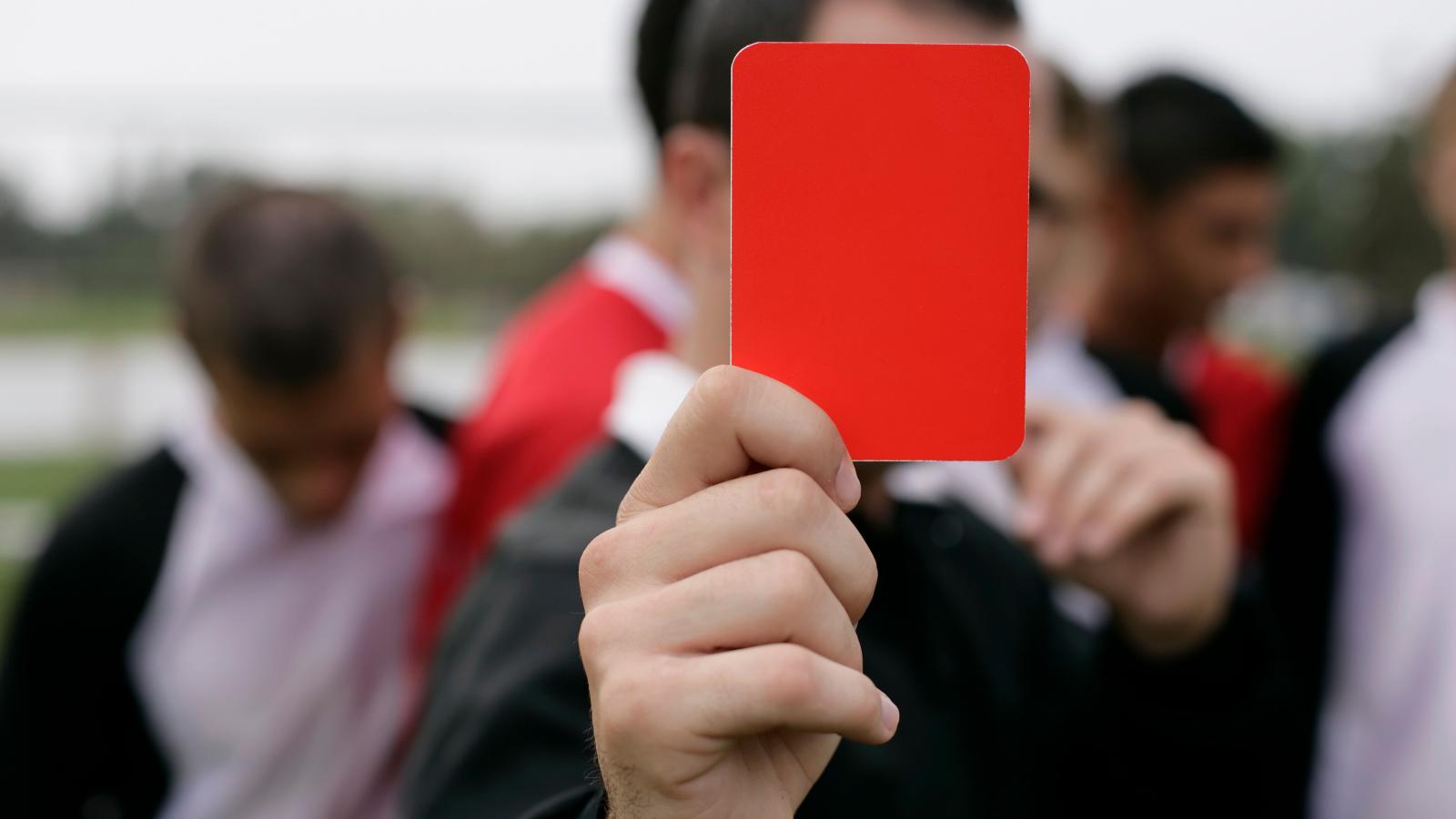
Still, the symmetry is exact. FIFA has just demonstrated that any red card shown by its impartial referees can be made to vanish: one Article 27 decision, no reasons given. The red card shown by the Congress is different. It is the single sanction in world football that no disciplinary committee can suspend, because it is written into a law FIFA does not control. The referee’s decision, for once, would be final.
Whether a Rubicon has been crossed this time, as the Financial Times has asked, the next three months will tell. The answer lies with the member associations: whether they have the courage to act, and to uphold the values of a sport that their members and fans adore.
Marco Becht is Professor of Corporate Governance at the Solvay Brussels School of Economics and Management, Université libre de Bruxelles. Luca Enriques is Professor of Business Law at Bocconi University. Both are fellows of the European Corporate Governance Institute (ECGI).
A shorter version of this essay was published on the authors’ Substack on 9 July 2026: marcobecht.substack.com/p/the-red-card-football-can-show-infantino.
All rule claims checked against the FIFA Statutes, May 2024 edition (articles 25, 26(1), 28(2)(q), 30(2), 30(3), 30(9) and 35(4)), the Standing Orders of the FIFA Congress (sections 9 to 11), and the Swiss Civil Code (articles 63 to 67 and 75) in the Fedlex English translation. This is academic commentary, not Swiss legal advice.