The ECGI blog is kindly supported by
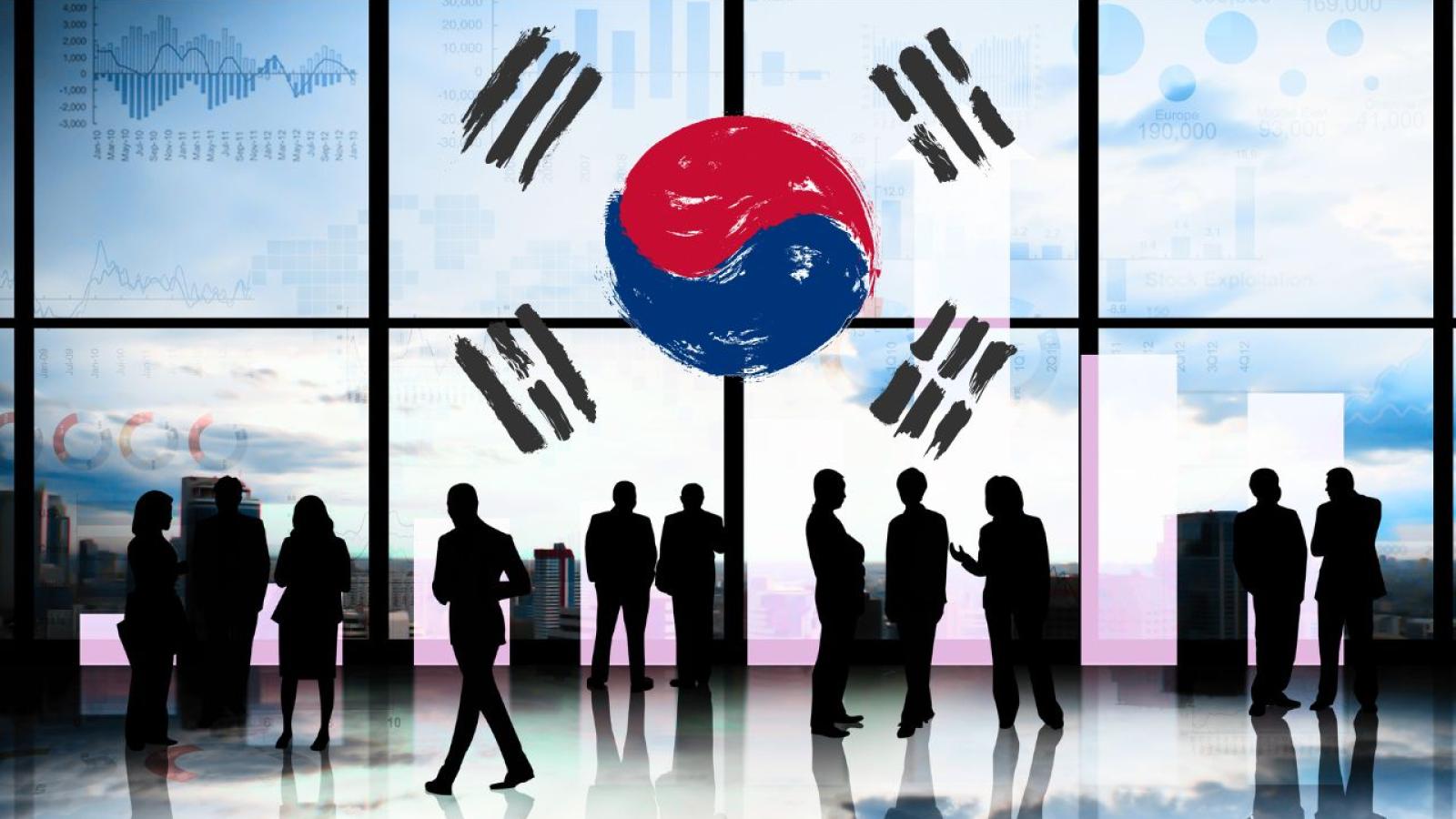
How Corporate Scandals Reshaped Korean Corporate Law
Authors

Korea's stock market's rapid transformation
For decades, international investors viewed the South Korean stock market through a lens of persistent frustration, commonly referred to as the "Korea Discount." Despite industrial giants and robust fundamentals, Korean equities traded at a discount to global peers for reasons ranging from geopolitical risk to foreign exchange regulations, with weak minority shareholder protection frequently cited as a contributing factor. Most large Korean companies have a family controlling shareholder, and directors appointed by that shareholder have sometimes faced criticism for prioritizing the broader business group, or the family itself, over shareholders as a whole.
Yet Korea has recently pushed through one of the more ambitious rounds of shareholder-protection legislation seen anywhere. The 2025 Commercial Act amendment made explicit that directors owe a duty of loyalty not only to the company but to shareholders as a whole. The Korea Exchange has also launched a Value-up Program requiring listed companies to disclose how they plan to improve shareholder value, and a further Commercial Act amendment has made it easier for non-controlling shareholders to elect one or two directors through cumulative voting. The market has responded positively: the KOSPI rose 75.5% in 2025, the best performance of any major index that year, and climbed past 8,500 by May 2026, up from roughly 2,400 at the start of 2025. Much of this rally reflects the AI and semiconductor boom, though the legislative reforms are widely seen as having contributed too, and the Korea Discount has eased considerably in just the past year or two.
Four episodes, four reforms
The 2025 reforms emerged against the backdrop of a decade marked by widely publicized corporate scandals, which redirected public discourse from overt white-collar criminality to broader concerns about structural fairness and shareholder value. The 2015 merger between Cheil Industries and Samsung C&T first exposed the limits of a strictly rule-based system. Because both companies were listed, the exchange ratio followed a formula based on recent share prices, as required under the Capital Markets Act. Some investors criticized the valuation as disadvantaging minority shareholders to facilitate a succession process; the directors maintained the ratio was lawfully calculated and argued they owed no direct responsibility to shareholders, since their duty of loyalty ran only to the company. This helped trigger the ongoing debate that led to the Commercial Act amendment on directors' duty of loyalty.
The accounting fraud at Daewoo Shipbuilding & Marine Engineering (DSME), disclosed in 2015, raised questions about gatekeeper independence. The overstatement of results led to the criminal punishment of the company's CEO, and its outside auditor was barred from taking new listed-company clients for a year. Korea's accounting transparency has long lagged its economic development, and DSME became the catalyst for reforming the external audit system.
A third episode was an activist campaign at SM Entertainment, a K-pop powerhouse, where founder Lee Soo-man held only 18.5% of the company yet tunneled much of its revenue to a private consulting vehicle he wholly owned. In 2022, Align Partners — an activist fund with just a 1.1% stake — used Korea's "3% rule," capping any shareholder's voting power in auditor elections regardless of stake, to elect an independent auditor over management's objection, winning over 81% of the vote. The board terminated the consulting contract and Mr. Lee exited the company, sparking a boom in shareholder activism previously rare in Korea.
Public sensitivity deepened with LG Chem's 2020 hive-down of its EV battery division into a subsidiary listed separately in a massive 2022 IPO, driven by strong market expectations for the EV battery business. Parent shareholders received no shares in the new entity and felt stripped of the core asset they had invested in, and the parent's share price fell by almost half. The transaction was entirely legal, but it triggered public outcry over the problems inherent in the pyramid ownership structures widely used in Korea.
From scandal to statute
Each episode fed directly into reform. The Samsung case led to abolishing the mandatory pricing formula for mergers between listed companies; such mergers or squeeze-outs between affiliates are now typically reviewed by a special committee of independent directors. The July 2025 Commercial Act amendment, despite political controversy, made explicit that directors owe a duty of loyalty to shareholders in addition to the company. DSME triggered a 2017 overhaul of the External Audit Act: after six consecutive years of freely choosing its auditor, a listed company must now accept one assigned by the Securities and Futures Commission for the next three years. The September 2025 amendments made cumulative voting mandatory in board elections, and doubled, from one to two, the number of audit committee members who must be separately elected under the strengthened 3% rule — the same mechanism that gave Align Partners its foothold at SM Entertainment. The LG Chem case led to a listing-rule amendment restricting listed companies from separately listing subsidiaries, aimed at the pyramid-ownership structures that let controlling families exercise control through small stakes.
A political lesson for a concentrated-ownership world
The most remarkable aspect of Korea's governance rewrite is how it was achieved. Conventional scholarship holds that investor protection requires strong institutions built up through decades of incremental judicial activism and robust private litigation. Korea largely bypassed that timeline through democratic mobilization: its retail investor base grew from roughly six million in 2019 to nearly fifteen million by 2022, and with equity holders now close to a third of the electorate, capital market fairness became a pressing campaign issue for lawmakers.
Interest in controlling shareholders is rising worldwide. In most jurisdictions outside the US, the UK, and Japan, concentrated ownership is the norm, and even in the US, controlling shareholders at major tech companies have forced a doctrinal rethink. Delaware's amendments on conflicted controller transactions, and some companies' reincorporation in Texas, have brought fresh debate over the rules governing controllers. Korea's experience offers an instructive case study in how minority shareholder protection can improve rapidly when ambitious legislative design meets a politically significant investor base.
______________
Joon Hyug Chung is an Associate Professor at Seoul National University School of Law and a Non-standing Commissioner of the Securities and Futures Commission of Korea.
This post draws on the forthcoming chapter, "How Corporate Scandals Reshaped Korean Corporate Law - Concentrated Ownership and Directors' Duty of Loyalty to Shareholders" in Corporate Scandals in Asia: Legal and Policy Implications (Luh Luh Lan, Ernest Lim & Joon Hyug Chung eds., Cambridge University Press, 2027), which was presented at the Conference "Corporate Scandals in Asia and Beyond: Legal and Policy Implications", held in Singapore and hosted by NUS in collaboration with ECGI. Visit the event page to explore more conference-related blogs.
The ECGI does not, consistent with its constitutional purpose, have a view or opinion. If you wish to respond to this article, you can submit a blog article or 'letter to the editor' by clicking here.