Corporate Political Responsibility with Tom Lyon
Episode Summary
In 2021, a senior Exxon lobbyist in Washington sat down with what he thought were job recruiters. They were undercover activists from Greenpeace's Unearthed project, and the camera was rolling. He described speaking with Senator Manchin's office every week and working through what he called shadow groups. Publicly, Exxon said it supported the goals of the Paris Agreement. Which of these two Exxons matters more for the climate?
Milton Friedman told business its one social responsibility was to make money within the rules of the game, but he did not spend much time on who writes those rules. In the United States, business is the dominant force in lobbying and a major source of campaign money. Companies do not only play the game; they help draft the rule book. Tom Lyon argues that this is where a company's real social footprint lies, more than in its emissions reports or supply chain audits. His answer is Corporate Political Responsibility, or CPR.
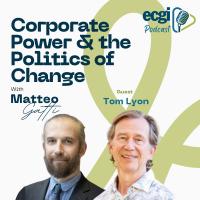
In this episode, host Matteo Gatti (Professor of Law at Rutgers Law School and author of Corporate Power and the Politics of Change) puts Lyon's work next to his own. CPR is about how companies shape the law that governs everyone; corporate governing is about companies acting where the law is silent or slow. They are two channels of the same power, and they feed each other.
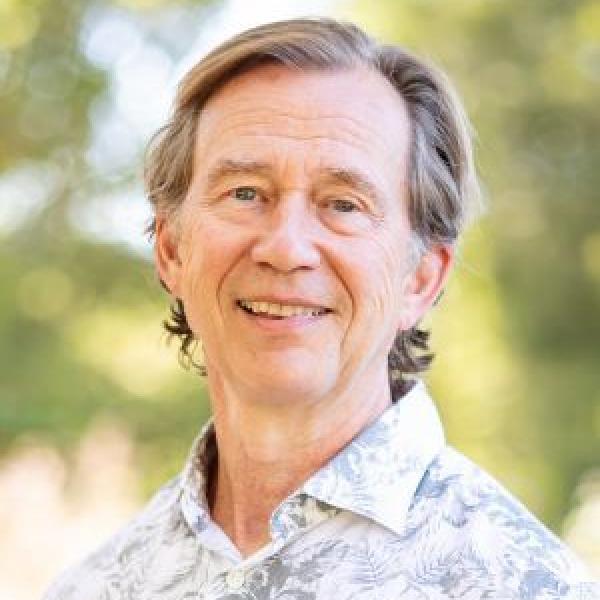
Tom Lyon is Professor of Sustainable Science, Technology and Commerce and Professor of Business Economics and Public Policy at the University of Michigan. He developed the idea of Corporate Political Responsibility, helped write the Erb principles that put it into practice, and is faculty advisor to the CPR hub and co-founder of the Greenwash Action Lab. His forthcoming book, From Greenwash to Green Trust, is due from Stanford University Press in 2027.
Matteo Gatti (Host) is Professor of Law at Rutgers Law School and a research member of the European Corporate Governance Institute (ECGI). He is the author of Corporate Power and the Politics of Change (Cambridge University Press).
Key Topics Covered
Where CPR Came From Lyon traces the idea to a 2016 retreat on whether companies can lead systemic change on sustainability. The group found few examples of companies leading it and many of companies blocking it through political influence. That became "CSR Needs CPR" in the California Management Review: what firms do to block progress matters more than the tinkering in their own supply chains. Lyon sees David Vogel's "market for virtue" as still limited, and finance as no saviour.
CPR and Corporate Governing Gatti describes one channel working through the state (lobbying, political spending) and the other working around it (private action filling gaps). Lyon adds that they reinforce each other: a company can lobby covertly against real regulation while announcing a performative emissions cut, and look like a good corporate citizen.
Why ESG Ratings Miss Hypocrisy Lobbying and dark money are hard to track, and disclosure rules are weak. Lyon's own research, using CDP data, shows high-emitting firms lobbying against climate policy and low-emitting firms lobbying for it, but that took enormous effort to establish. Ratings providers cannot see what firms lobby for or whom they fund.
What to Ask of Companies Lyon does not expect coal companies to lobby responsibly; the best ask is that they stay out. CPR is aimed at the much larger group of companies harmed by climate change, which face a collective action problem and stay quiet while beneficiaries of inaction are heard.
Widening the Frame Lyon's 2022 MIT Sloan Management Review piece with Andrew Winston and Elizabeth Doty extended CPR to four systems: market rules, civic institutions, public discourse, and the natural world. The original three levels remain: transparency, accountability, and responsibility. Gatti notes this is where the two bodies of work meet, since firms are taking on responsibility for democratic infrastructure.
Government Retaliation and Motives Lyon points to Stavros Gadinis's Corporate Ordering: set principles, make strategic choices, track implementation. A company with a coherent system can stand firm, as Costco did while Paul Weiss folded. On motives, GM's reversals on California emission standards were calculation, but Lyon does not require pure motives. What matters is net positive impact.
The Erb Principles and Where to Draw the Line The 2023 Erb principles include a legitimacy test, shaped by IBM's need to decide when to speak out. It would screen out many polarized issues, but Gatti pushes back that the line is hard to draw (Dobbs and a company's female workforce, for example). Lyon contrasts a maximalist view of positive engagement with a minimalist one: less money in politics and far more transparency. Both agree transparency is the strongest common ground.
Who Decides and Who Holds Firms Accountable Lyon believes political engagement should be a board-level issue, as the Center for Political Accountability's model code recommends. Accountability can come from NGOs such as InfluenceMap, the New Climate Institute, and Business for America, and from structures like Colin Mayer's industrial foundations and trust boards.
A First Draft, Not the Law With Congress unable to function, Lyon expects voluntary ordering in the short run, in the hope that it sets norms later written into law. His forthcoming From Greenwash to Green Trust argues that honest green firms earn trust through transparency about their political engagement.
Links
- From Greenwash to Green Trust by Tom Lyon (Stanford University Press, 2027)
- Corporate Political Responsibility, edited by Tom Lyon (Cambridge University Press, 2023)
- The Importance of Corporate Political Responsibility by Tom Lyon, Andrew Winston & Elizabeth Doty, MIT Sloan Management Review (2022)
- CSR Needs CPR: Corporate Sustainability and Politics by Tom Lyon et al., California Management Review (2018)
- The Market for Virtue: The Potential and Limits of Corporate Social Responsibility by David Vogel, (Brookings Institution Press, 2006)
- Corporate Power and the Politics of Change by Matteo Gatti (Cambridge University Press, 2025)
Related episode:
- Corporate Ordering: How Corporations Navigate Social Conflict with Stavros Gadinis – ep. 11 in Corporate Power and the Politics of Change with Matteo Gatti
- Full podcast series: Corporate Power and the Politics of Change with Matteo Gatti | ECGI
Corporate Power and the Politics of Change is an ECGI podcast. All episodes are available on the ECGI website and wherever you listen to podcasts, including YouTube.
Connect with us:
📱 Follow on YouTube | Spotify | Apple | Amazon