The ECGI blog is kindly supported by

When Climate Activism Changes Business
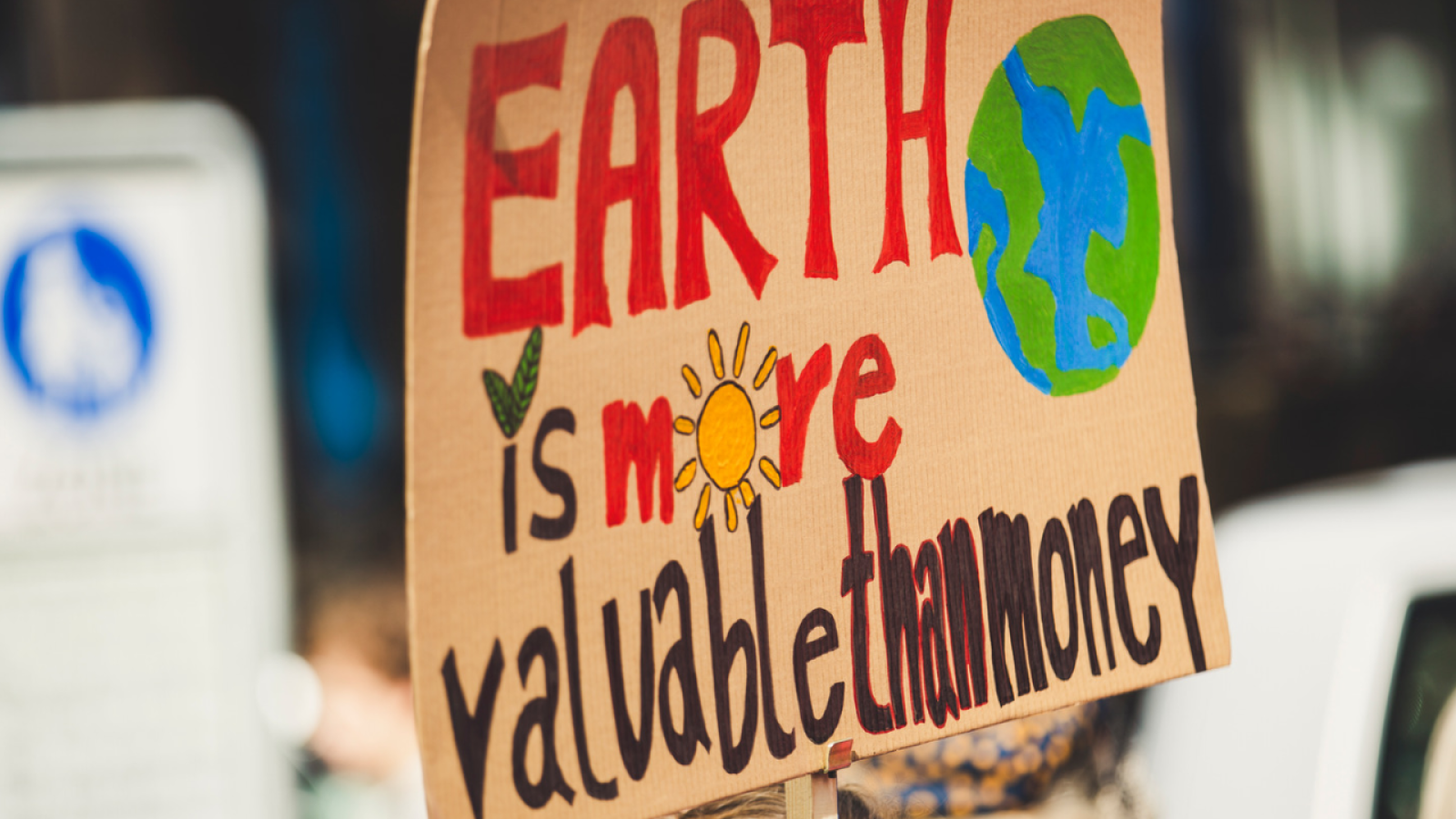
In September 2019, millions of high school and college students around the world took to the streets to demand action on climate change. Often referred to as the Global Climate Strikes, these demonstrations brought unprecedented public attention to the environmental challenges facing governments and businesses alike. But while such demonstrations are typically understood as a way to influence policymakers and public opinion, could they also change what companies actually do?
Our research suggests that they can. Taking the United States as our setting and linking corporate headquarters to over one thousand climate strike locations across the country, we compare firms headquartered in the direct vicinity of a protest with otherwise comparable firms located farther away. We find that firms close to the demonstrations subsequently reduced their direct Scope 1 emissions by approximately 12%, and document improvements in other dimensions of environmental performance as well. Across the firms in our sample, the observed emissions reductions correspond to an estimated cumulative decrease of approximately 5.3 million tons of CO₂.
Notably, these effects persisted in the years following the strikes, and the response weakened with distance from protest locations. This pattern is thus consistent with a localised effect in that companies headquartered closer to the demonstrations experienced larger subsequent reductions in emissions. But why would a protest in a company's local community influence its environmental performance?
Our findings point to managerial attention as a potential explanation. By making climate change more visible and immediate, local demonstrations may increase the salience of environmental issues for corporate decision-makers. Protests need not directly target a particular company or lead to changes in environmental regulation to matter. Instead, they may influence what managers pay attention to, how they perceive environmental concerns and associated risks, and which issues receive priority in corporate decisions.
Several findings support this attention-based interpretation. Using data on the presentation section of conference calls, we show that firms located near climate strikes subsequently discussed climate-related topics and strategies more frequently than firms located farther away, in the following quarters. We also find that the climate-related language in these firms' annual report risk disclosures became more negative, particularly when discussing transition risks. Together, these patterns suggest that the strikes made climate-related issues more prominent in corporate communication and risk assessments.
We also examine how firms translated this increased attention into changes in environmental performance. Our results indicate that firms exposed to nearby protests increased capital expenditure, particularly investment in greener activities. This is consistent with the idea that greater attention to environmental concerns can influence not only what managers discuss, but also how they allocate corporate resources.
Importantly, however, not all firms responded equally. Emissions reductions were concentrated among firms in lower-emission industries, while we find no evidence of comparable improvements among firms in the most polluting industries. One possible explanation is that companies differ in their capacity to respond. Some may have more opportunities to reduce emissions through operational adjustments or new investments, whereas others face more substantial technological constraints to realize abatement.
The conditions surrounding the protests also matter. The effects are stronger when demonstrations are likely to attract greater public attention, including in larger metropolitan areas, under more favourable weather conditions, and in locations that are more walkable or attract more participants. These patterns reinforce the salience-based interpretation of our findings, in that protests are more likely to influence corporate behaviour when they are more capable of capturing attention.
Our findings carry several implications. First, our paper showcases that corporate governance extends beyond the boardroom. Shareholders, directors, regulators, and investors have been shown to materially influence firms’ environmental behavior. Yet, while these actors remain essential, the social environment surrounding a company can also shape managerial priorities. People without ownership stakes, voting rights, or formal access to corporate decision-makers may thus nevertheless influence corporate behaviour.
Second, proximity may matter because it makes collective action more immediate and visible. General awareness of climate change does not necessarily produce the same response as exposure to demonstrations in a company's local environment. Our findings suggest that the effectiveness of stakeholder engagement may depend not only on the message being communicated, but also on whether it captures the attention of those making corporate decisions.
Finally, we should be realistic about what activism can achieve. Our findings do not imply that every protest reduces emissions or that voluntary action can replace environmental regulation. The responses we document vary across industries, underscoring the importance of firms' ability to translate increased attention into concrete action.
The broader lesson, however, is that corporate governance does not stop at the company gates. Crowds marching in the streets nearby may lack the authority to appoint directors, vote on resolutions, or impose sanctions, but they have the ability to make an issue harder to ignore. When that shift in attention changes how managers perceive environmental concerns, it can also change how a company operates.
To understand what drives corporate environmental performance, we may therefore not only need to look at who holds formal power over firms, but also at who can shape what managers pay attention to. In our setting, our findings suggest that even those still in the classroom can help shape what happens in the boardroom.
Wouter Torsin is an Assistant Professor of Finance at HEC Liège (ULiège).
Caterina Santi is an Associate Professor in Finance at HEC Liège (ULiège).
This blog is based on the paper “Climate Strikes and Corporate Emissions”, which received the Best Paper Award at the 7th Annual RCF-ECGI Corporate Finance and Governance Conference, held in collaboration with ECGI. Universidad CEU San Pablo hosted the conference in partnership with ECGI, with support from the British Academy of Management’s Corporate Governance Special Interest Group and the Institute for Humane Studies. Visit the event page to explore more conference-related blogs.
The ECGI does not, consistent with its constitutional purpose, have a view or opinion. If you wish to respond to this article, you can submit a blog article or 'letter to the editor' by clicking here.