The ECGI blog is kindly supported by

28th regime: tool or branding?
The European Union knows it has an integration problem. Too many national barriers, too few investments making their way into start-ups and scale-ups, and too many promising companies heading to the U.S. to seek funding. The so-called “28th regime” is one tool the EU can use to boost its prospects, but only if it digs deep on what problem it is trying to solve and why this tool, rather than full alignment, should be the way to move ahead.
Capital markets union (CMU), explicitly on the table since 2015, was supposed to fix this by aligning supervision, taxation and bankruptcy rules across the 27 member states so Europe’s financial architecture could catch up to Europe’s needs.
As has been well documented by Mario Draghi, Enrico Letta and others, these lofty goals have not met with much action. But the need remains, especially now that U.S. politics and military actions have introduced so much uncertainty to global markets. EU leaders have therefore kept up their high-minded calls for more financial integration and the European Commission has launched many proposals over the last 12 months on supervision, securitisation, retail savings, pension planning and the “EU Inc.” business model.
Branding seems to be the biggest success so far. CMU was folded into the newly named Savings and Investments Union (SIU), a thoughtful name that aims to narrow the separation between finance world and the real economy. Now the EU faces a new marketing problem: how to advance and differentiate its many ideas for moving forward on multiple levels, at multiple speeds. This is a particular stumbling block for the legal construction known as the “28th regime”.
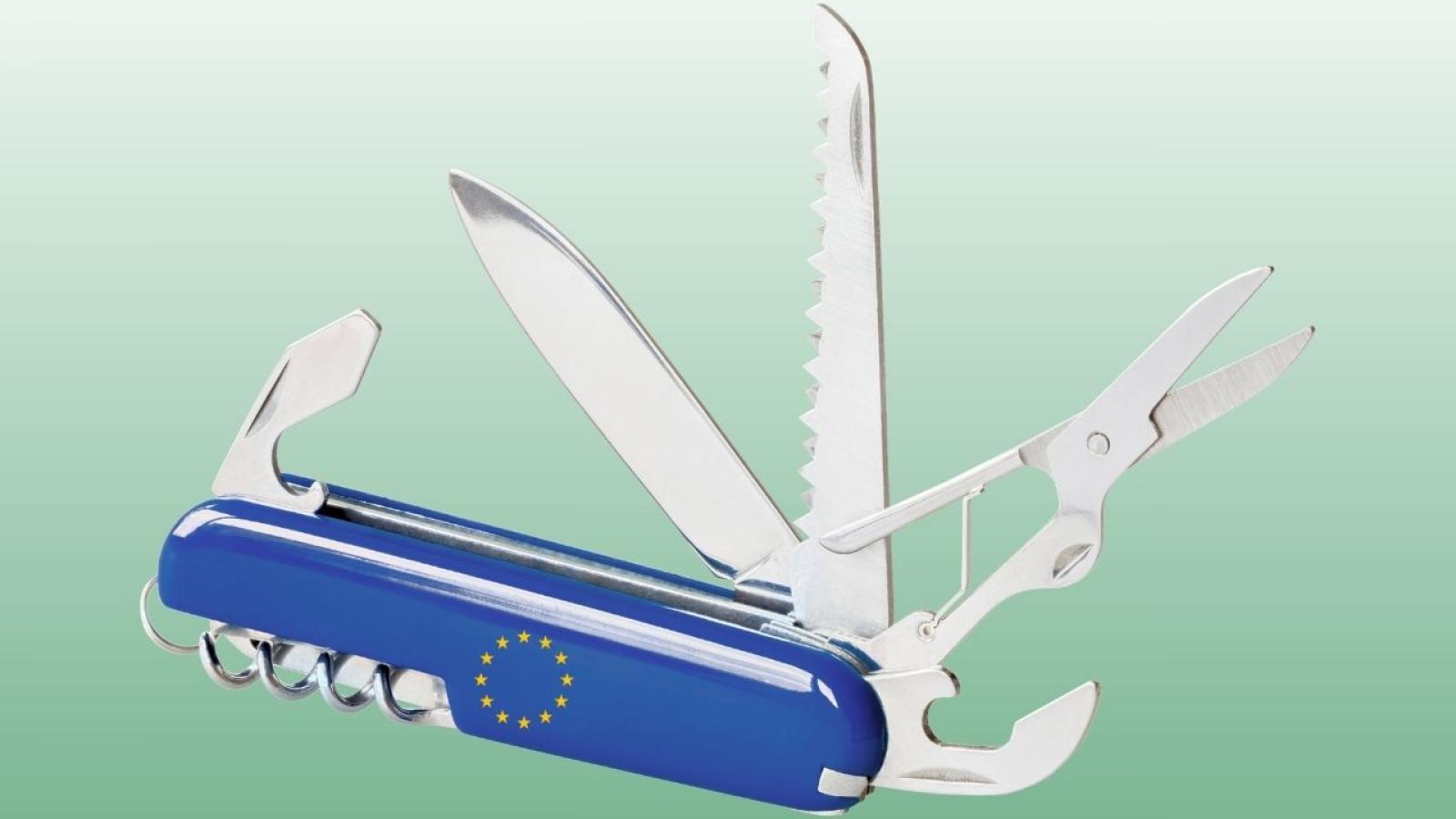
At its core, “28th regime” is a mechanism the EU can use to offer alternatives to national rules without supplanting and absorbing them. When deployed, it allows for optional EU rules to be used in place of national procedures, and it does not need to be set up in all 27 member states to take effect. This tool is already used for aspects of cross-border divorce, a venture capital passport, for a European patent, and it has been floated for managing things like tokenized financial infrastructure, employee stock participation, important projects of common European interest, and of course the EU Inc. plan.
The problem now is that the name “28th regime” may have become too closely associated with EU Inc., and therefore become less accessible in areas where it could do additional – and possibly more – good.
As it stands, EU Inc offers some interesting possibilities for offering speedy and paperless incorporation, reduced costs of notaries, and a long-sought European-level plan for employee stock options. What it does not do is offer an ambitious workaround on insolvency or set the stage for a huge surge in cross-border financial transactions.
This leaves European Commission President Ursula von der Leyen and national leaders in a bind. Rather than try to sell multiple uses of the 28th regime tool, policy makers have fallen back on other terms of art like “coalitions of the willing”, “two-speed” integration or even just “enhanced cooperation”, the legal mechanism that allows groups of at least nine countries to harmonise faster than the EU as a whole.
On the one hand, the words matter less than the policy. On the other hand, recasting CMU as SIU has shifted terminology without doing much for markets. Partial harmonisation plans for companies and investors already face plenty of substantive criticism on things like labor protections and legislative complexity. If the EU is going to do better, it needs to be very clear on what and why.
Thinking of EU Inc. as “the” 28th regime poses several difficulties. It holds up the idea that there is a single magic extra path for countries to become more integrated via piecemeal steps. This is a fallacy. First, the only way to integrate fully is to harmonise, as EU history shows over and over again. Second, it makes it harder to use the 28th regime tool, which in itself can be useful, for other policy goals. Third, it makes the legal underpinnings even more obscure: it takes attention away from the three main treaty constructions for pushing ahead and from enhanced cooperation, which typically is an essential part of the 28th regime playbook — but may be perceived here as a separate option.
My recommendation would be to focus on priorities and less on branding exclusivity, and my choice of top priority would be facilitating large cross-border investments. This suggests looking at a 28th regime for a type of contract, rather than a type of company, with clear arbitration practices and asset recovery protocols. That way investors could spend more time doing due diligence on projects, not the legal landscape surrounding those projects, and channel their risk more directly into the economy.
There’s nothing wrong with the EU Inc. proposal, which deserves a fair debate on its own merits. But it will not fix the EU’s core capital markets conundrums. The 28th regime tool is too flexible to use just once.
______________
Rebecca Christie is a Senior Fellow at Bruegel and hosts Bruegel's podcast, The Sound of Economics.
This blog is based on a discussion held at the 7th LawFin Workshop The 28th Regime: An Effective Legal Architecture for Innovation in Europe?. Visit the event page to explore more conference-related blogs.
The ECGI does not, consistent with its constitutional purpose, have a view or opinion. If you wish to respond to this article, you can submit a blog article or 'letter to the editor' by clicking here.